{{ item.categories[0] }}

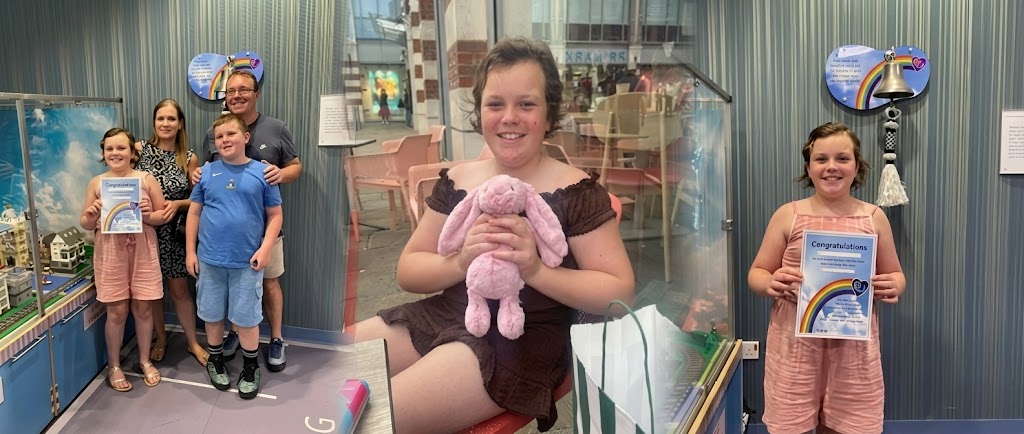
Sam’s story of life after her daughter’s leukaemia diagnosis.
Sam is a midwife. She spends her working life caring for other people, so when her daughter Evie was diagnosed with leukaemia, aged nine, she knew a lot about the medical side of things. What she wasn’t used to was being the parent sitting on the other side of the table.
“I work in the NHS and I think knowledge was my nemesis,” she says. “I don’t like relinquishing control. I am a health professional. That was the biggest thing I had to learn.”
Evie had been unwell for about three months before her family finally received a diagnosis, following 10 healthcare contacts. They spent two weeks at The Royal Marsden before returning home and meeting ellenor’s children’s team.
Sam says she was wary when she first heard the word hospice. Everything was still so new, and she had an idea of what that meant. She hadn’t expected how much treatment and care could be provided at home, or how important the team would become to the whole family.
“It’s kept us out of hospital a lot,” she says. “I really wouldn’t have foreseen how much treatment and care we could have received at home.”
But it wasn’t just the treatment that made a difference. It was the way the team became part of family life.
The family had three dogs, and there was no need to tidy the house before a visit. Sam remembers how the team made themselves at home without making her feel she had to pretend everything was fine.
“If there was a bit of lasagne from last night’s dinner on the floor, that was fine. You didn’t judge me for it,” she says.
“It was literally walking into our home as guests, not necessarily as health professionals.”
For Sam, who was used to being the person with the answers, learning to trust others wasn’t easy. But she came to value having someone she could call when she was worried, even if she thought her questions might sound silly.
“I know I might be stupid. I know I might be being silly. But can I just ask?”
The team would listen, help her work through her concerns and be honest when something needed attention. Sam says having people she trusted around the family made a real difference to how they coped.
With Evie receiving treatment, Sam and her husband, Dave, were also trying to keep everyday life going for their son Henry, who was seven when his sister became ill.
“We’ve got one child whose world is about to change massively. Let’s try and keep some element of normality for the other one.”
Evie missed her friends and wanted to return to school whenever it was safe. Sam knew there were risks, particularly around infections, but also wanted to avoid keeping her daughter away from the world unnecessarily. The family took advice from the team and tried to maintain as much of their usual routine as possible.
As time went on, Sam began to notice changes in Henry’s behaviour and some resentment towards his sister. She wanted to address this before it became harder for him to manage, and ellenor helped the family access play therapy.
“We knew his time would come,” she says. “It was a family affair, not just an Evie affair. And that was really, really paramount for us.”
Evie was the one having treatment, but Sam and Dave were also trying to help Henry understand what was happening. For a long time, the family had carried on without talking much about the experience. As Henry grew older, Sam realised he needed some support of his own.
The family’s experience also made Sam think about the emotional impact of serious illness on parents. She accessed counselling at different points, initially deciding it wasn’t the right time before returning when she felt ready.
“You need to have people you click with. Otherwise, the process just won’t work,” she says.
She found someone she connected with and knows she can seek further help if she needs it.
“Physical stuff, you know, you can get on with. It’ll work or it won’t. Mental and emotional stuff has a longer-lasting effect.”
The family also went to one of ellenor’s Christmas parties. Sam had been reluctant to attend, having found it difficult to be around other families affected by serious illness during Evie’s treatment. But she was glad they went.
All four attended together, which wasn’t something they often managed while Evie was receiving treatment. It gave them a chance to spend time as a family, away from the routines of hospital appointments and care.
“It was just so low-key, interactive,” she says. “You weren’t care professionals that day. You were just normal people.”
Looking back, Sam wishes they had attended more events. She hadn’t fully appreciated the range of families supported by ellenor or the opportunity to meet others who understood something of what they were going through.
Her experience has changed the way she thinks about hospice care. She knows now that it offers far more than she had initially imagined.
“Be curious,” she says to anyone who might be hesitant about accepting support. “Just open the door a little bit. Leave that door or window ajar. It will surprise you because it’s not necessarily what you initially think it is.”
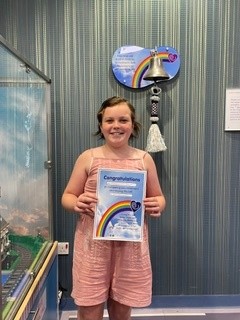
Evie has now completed treatment and has started secondary school, which she is enjoying. She is doing well, although her family remains on the long road towards the five-year milestone. Her clinical care with ellenor has come to an end, but Sam knows she can still contact the team if the family needs support.
As a midwife, Sam is used to caring for others. When Evie became ill, she had to learn to accept that care herself.
“If we didn’t have the confidence in the team, we had around us, even getting to this point, our family’s mentality would have been completely different,” she says.
Filter by: