What about the children?
Inside the work of ellenor’s counsellors supporting young people through loss at Christmas.
Usually, Christmas is sold as a time of togetherness – presents piled high, laughter around the table, twinkling lights filling every corner. But for families living with serious illness or bereavement, it can feel like the cruellest time of year.
That’s when people like Carla Ambrose step in.
For families living with serious illness or a death, though, Christmas isn’t, as the song goes, “the most wonderful time of the year” – it’s the hardest.
That’s when people like Carla Ambrose get to work.
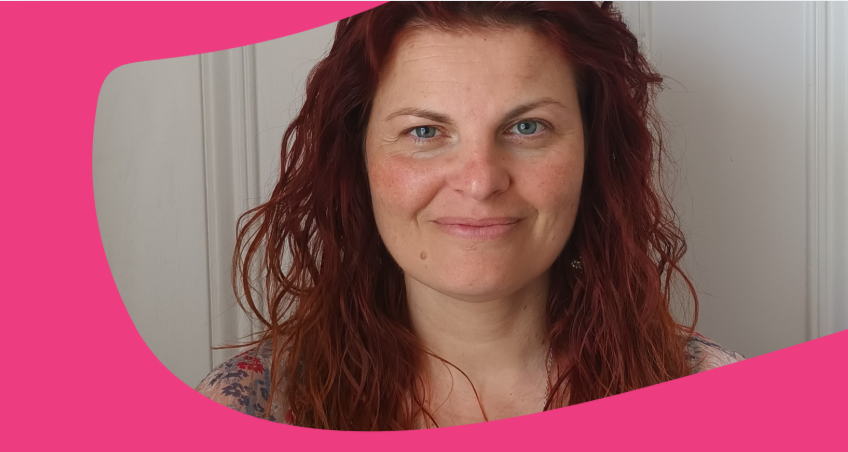
Carla is a Family Support Worker and Counsellor in the Therapeutic Services at ellenor – a hospice charity providing care and support for patients with life-limiting and life-threatening illnesses in Kent and Bexley, and their families. Alongside palliative and end-of-life care, ellenor also provides a range of wellbeing services – such as bereavement support, counselling, spiritual care, music therapy, and financial support – for patients and their loved ones.
Carla’s role at ellenor involves supporting patients, carers and children before and after a bereavement: splitting her week between flexible family support and structured counselling.
But Carla’s career didn’t begin in a therapy room. She spent two decades teaching reception-age children, where personal, social and emotional development sits shoulder-to-shoulder with phonics and numbers. After retraining, those years working with children are clear to see in how she supports families now: unafraid of hard conversations, relentlessly practical, and deeply attuned to how children grow and change.
“Happy children learn,” she says. “If they’re not happy, something’s going on – and that’s what you need to prioritise. Training as a counsellor made me realise what active listening really meant. People say they’re listening; but often, they’re not.”
One parental instinct Carla meets again and again. When a mother or father tries to “protect” their child by keeping them away from the hospital room, the changes at home, the prognosis discussions – even the funeral.
Yet as Carla points out, hiding things from children frightens them. Preparing them makes them safer.
“Parents naturally want to protect,” Carla says. “But we can’t protect children from everything. What we can do is prepare them. Children aren’t stupid; they know something’s wrong – changes in routine, in behaviour. If you communicate with your children or allow someone like me to when you don’t have the capacity, they’re likely to have the best possible grieving experience they can.”
That becomes especially critical in December. The first empty chair at the table. The day everyone else calls “merry.” Carla strips plans back to what genuinely helps – and hands part of the decision-making to the child.
“Ask your child what they want to do,” Carla advises. “How do they want to remember their loved one? If they want to write a card to the parent who died, watch their favourite film, have chocolate cake because Dad loved it – or even do almost nothing – that’s okay.”
January brings a different challenge, as the calendar flips and time itself becomes proof that a person is gone.
Like the first Christmas without mum, or dad, or grandma, or a sibling, the beginning of the first new year without them feels significant. So Carla pulls families back to the present with practical next steps – small, doable actions that keep a child steady. That might mean keeping routines (such as mealtimes and bedtimes) simple, setting clear check-in points when you’re apart, and planning one thing to look forward to each week.
Death doesn’t just remove a person, Carla points out – it rearranges roles and where a child thinks they stand in the family. Labels land early and heavy (“you’re the man of the house now”) and can derail healthy grieving.
“Your grief is often determined by your attachment to the person who died,” she explains. “I’ve seen a fifteen-year-old become the adult of the family overnight – looking after Dad and her younger sister and not grieving for herself. Years later, as an adult, she’s having to go back to do what she didn’t as a teenager.”
When a child’s world changes, their behaviour often does, too. What adults label “clingy”, or “attention-seeking” is usually a child checking the ground is still solid. “They do those things because they need you to stay close,” Carla says. “So, keep things predictable. Agree how they can check in. Say where you’re going, explain when you’ll be back – and follow through. As that consistency returns, the behaviour usually settles.”
School is the next pressure point. Grief plays havoc with a child’s attention, so “back to normal” in week one is rarely realistic. Carla wants schools told early and returns phased. “When we’re grieving, we release more of a stress hormone,” she says. “We have less ability to concentrate. Logic and rationality are harder to access. Expecting a child to learn like usual is like asking them to read a sign through smoke.”
Inside the therapy room at ellenor, Carla keeps sessions child-led, and her tools are both simple and exact. One of her methods involves using stones, through which a child is able to map who matters by playing with the pebbles. Like in play or art therapy, the choices and textures do the talking when words won’t.
She’s seen how a simple object can carry what a child can’t yet say. In one session, a girl chose a chalky stone with a hole and held it tight. “This is for me,” she told Carla, “Because something’s missing, and my dad is missing now.” She talked about a hill he used to take them to, and the day he let his daughters run on ahead – part of her knowing he couldn’t keep up; part of her knowing he wanted to see that they could.
Carla’s work doesn’t stop when the session ends.
Outside the room, Carla rings schools to set up phased returns, briefs teachers on what to expect, helps parents prepare children to visit the hospice, and plans memory-making so the building feels safe before a death. She checks in between sessions when crises flare, coordinates with play and music therapists, and, when needed, helps families decide how to say goodbye – even when that means backing choices others question.
“One mum brought her husband’s body home because both daughters wanted to say goodbye there. She got a lot of resistance. I asked, ‘Who are the most important people in the world to you?’ She said, ‘My girls.’
“My response? ‘Then do what helps them.’”
Children don’t stop grieving when the decorations come down. Thanks to Carla and ellenor’s Therapeutic Services team, they don’t have to grieve in silence either.
Here are some of the approaches Carla uses when guiding parents through those difficult firsts, like Christmas.
- Prepare, don’t shield. Children notice change – give simple, honest facts.
- Tell school early. Name a key contact and consider a phased return.
- Give the child a say. Ask what they want to do, remember, or skip.
- Keep it practical. Agree how they can check in and when you’ll be back.
- Match support to the day. Work on what matters most now – even if it isn’t grief.
- Mark it your way. A card, a film, their person’s favourite cake, or a quiet day – all fine.
- Joy is allowed. Laughter and presents are okay.
ellenor provides hospice and wellbeing support for families across Kent and Bexley. To learn more or support their work, visit Wellbeing and Therapeutic Services