Training That Changes How We Die, Inside ellenor’s End Of Life Champion
“Would you want someone stressed, flustered and panicking looking after you when you’re dying?”
Sue doesn’t ask this to shock. She asks it because anyone providing end of life care needs to feel competent and confident at the end of life. Yet many carers, however dedicated they are, haven’t been given the tools or support they need to feel steady in those moments. When someone is frightened or deteriorating quickly, the pressure on staff can be immense. Some even leave their jobs after witnessing what Sue calls a” challenging death’ – an experience so distressing it stays with them long after their shift ends.
The End of Life Champion programme is increasingly relevant as discussions about end-of-life care and assisted dying continue nationally. ellenor’s End of Life Champion training was created to change that journey.
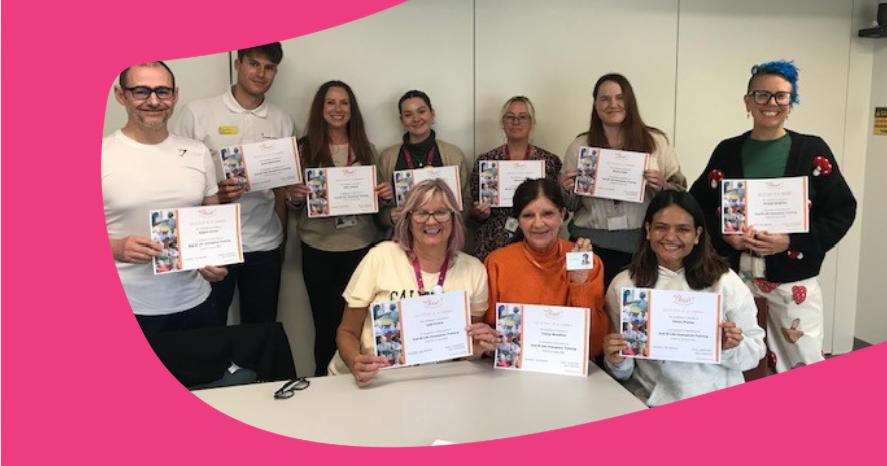
The programme is designed for staff working in care homes, nursing homes and homes for people with disabilities. And Domiciliary care agencies. It is open to registered and non-registered professionals alike, because, as Sue explains, “an End of Life Champion doesn’t have to have a high level of education or top marks – they simply need a genuine passion & empathy for delivering high-quality, dignified care and a willingness to grow their skills.
ellenor’s training provides a strong, practical foundation. Champions learn how to recognise a patient’s health deteriorating, how to manage symptoms and how to remain calm in situations that might otherwise feel overwhelming. Instead of panicking and dialling 999, they gain the confidence to assess what is happening, respond appropriately and support the patient and their family with calm, high-quality care.
“I’d like our End of Life Champions to walk away feeling much more empowered to deal with symptoms at end of life and not panic; to not get scared or have to leave their job. I’d like care homes to be able to retain their employees, too, and for families to feel reassured that their loved one is in the right place at the right time, surrounded by people who know what they’re doing and care deeply about doing it well.
Training in a hospice environment also strengthens outcomes for patients. As Sue notes, end-of-life care is not static. People’s needs, expectations and health conditions shift, and care systems must evolve with them. ellenor’s courses are regularly reviewed and adapted to ensure that staff can respond confidently to new challenges. Continuous learning isn’t simply an educational ideal – it is a practical necessity in providing high quality care.
Communication runs through every part of the End of Life Champion programme. And, as Sue emphasises, these conversations must begin long before the final days. Early, open communication allows carers to understand what matters most to a patient – their fears, their values, the small comforts that bring them peace. This shapes care that is personal, respectful and true to the person’s wishes.
“We teach our End of Life Champions not to wait until a patient is at the end of their life to have these discussions. By teaching good communication skills, and encouraging advanced care planning, we empower our End of Life Champions to find out more about the patient while they’re still able to.” This is the Holistic approach used in every hospice.
These conversations aren’t always easy, particularly when patient and carer come from different backgrounds or hold different beliefs. That is why cross-cultural understanding is woven into the training. Champions explore how traditions, faith and family roles shape what someone may need at the end of life. For one person it may be a prayer or a blessing; for another, holding a treasured object or seeing a much-loved pet. Recognising and honouring these differences is central to providing support.
The End of Life Champion programme was developed after recognising a clear knowledge gap across the sector.
“It matters more than anything else,” says Sue. “Because the patient, regardless of their condition or their abilities, is still a person; somebody who’s walked this planet alongside us. They might not have the insight to ask questions, but with the right strategies we can learn to understand their wishes, their fears, the things they love.”
Families often help fill in the picture, but hearing directly from the patient – while they are still able to speak for themselves – is irreplaceable. It allows care to reflect their true hopes, values and priorities. These conversations are a one-time opportunity to “get it right,” Sue says, and the confidence to begin them is something every carer can learn.
“Everyone has the potential to have a good conversation,” she adds. “You just have to be willing to say the first word.”
Families will always remember the care and the carer long after their loves ones have died, better memories, can often make the journey through bereavement a little easier.
To find out more information about End of Life Champion courses please email education@ellenor.org.