Supporting Families When It Matters Most
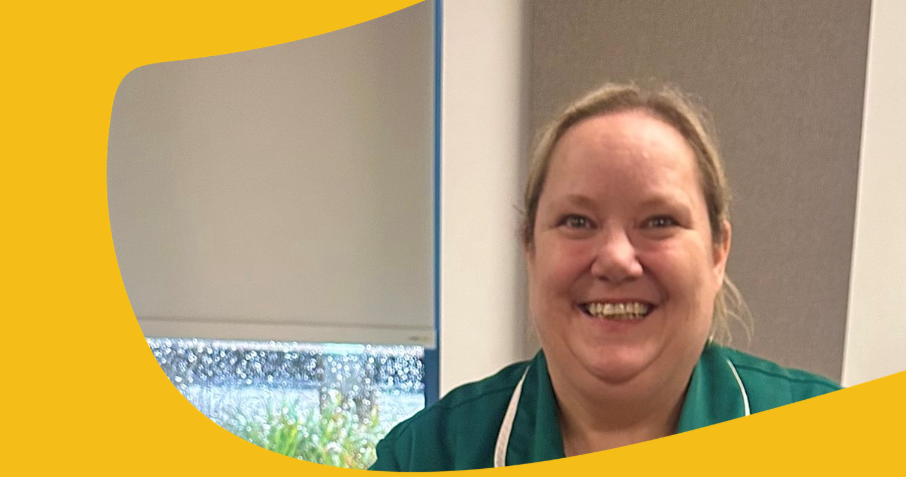
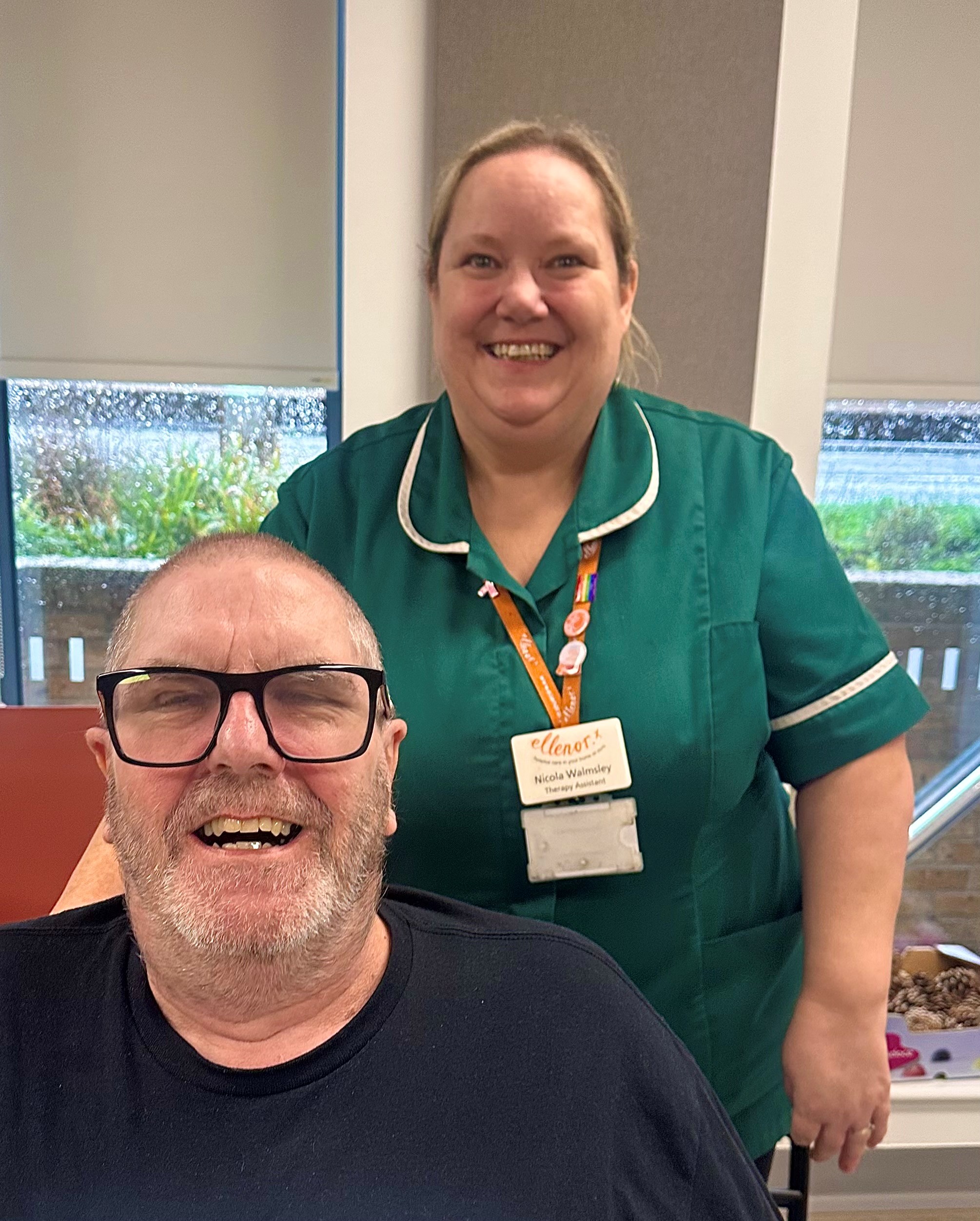
Therapy assistant Nicola Walmsley spends her days helping patients create memories, offering calm in moments of crisis and finding small ways to ease the weight of grief. At ellenor, her role stretches far beyond clinical care – into creativity, compassion and quiet acts of support.
On any given day at ellenor hospice, you might find Nicola Walmsley organising a seated exercise class, helping someone record their life story in a scrapbook or quietly taking handprints for a family who will soon face a loss. As a therapy assistant, her work slips between practical support and emotional care, often becoming whatever a patient or relative needs most in that moment.
“It’s not about the money or job,” she says. “You’re there to listen, to notice, to make things a little easier. You just try to make every moment count.”
Nicola loves talking to patients about their lives past and present, and their hopes for the future. One of her favourite activities is helping them create their “This is Your Life” scrapbooks, which contain memories and photographs, and anything from memorabilia to family trees.
“When the patient dies, the scrapbook is something we can give to their family,” said Nicola. “I recently completed one with a patient who attended our Needles and Knots group. She was admitted to the ward for symptom control and didn’t feel up to coming over to the Wellbeing building — so we took the Needles and Knots group to her. The scrapbook was created during her stays on the inpatient ward.”
Scrapbooking is just one of many activities ranging from Seated Exercise and the Green Shoots gardening club to Arts and Crafts and Music Matters.
“It is my job to organise the groups each week,” said Nicola. “I think of activities with therapeutic value. If a patient has dementia, we need to keep their mind active. If someone has an issue with their hands, we need to find activities where they use their hands. A lot of it is also about making sure everyone is emotionally and psychologically okay.
“When people come along to our groups, we can often see their health deteriorating, and we might liaise with our hospice at home team to make sure they are getting all the help they need. Some people can be fine for a long time then just dip.”
Every Monday, Nicola attends the multidisciplinary team meeting on the ward, where she and other staff members review and discuss the patients currently on the ward – whether they are there for symptom management, or end-of-life care.
She said: “Our Occupational Therapist identifies whether they need any equipment and explore what matters most to them, including whether they might like to join any of our therapy groups. Patients aren’t always at the end of life; many are on the ward for symptom control. I might meet them alongside the occupational therapist or physio, for example to support with moving and handling, and I can also be an extra pair of hands where needed.”
No one who works at the hospice is afraid of talking about death and dying and Nicola is no exception. She has sometimes been approached by ward staff to take painted handprints from a patient after they have died.
“It can be something the family really wants, something personal, a memory of someone they love,” she said.
“We get asked how we can be around people who are dying, but there’s something very special about knowing you’re helping their families. When I do the handprints, I always talk to the person who has died. We can also take a fingerprint, if families ask, which can then be used to create personal keepsakes, including jewellery.”
For Nicola her role is all about what matters most to patients and their loved ones.
She said: “About a year ago a patient wanted to see his seven-year-old daughter, but she didn’t want her last memory of him to be on a hospice ward. I asked my friend to bring in her miniature pony, and we had a little party in the garden. I was able to take the man out in his hospital bed to see his daughter.”
As well as helping on the ward and supporting the weekly therapy groups, Nicola also assists with the falls prevention group and joins the occupational therapist and physiotherapist on home visits.
“I can be an extra pair of hands to help with movement or mobility,” she said. “If the physio gives a patient exercises to do over a period of six weeks say, I can be the one who follows up.”
Nicola loves to make people smile, organising the patient Christmas and summer parties, as well as a recent art show in Gravesend. Her organisational and observational skills also come in handy with her daily paperwork, noting anything a patient has told her or any changes she notices in their health or mental wellbeing. She also arranges transport for patients attending groups and is the first point of contact for those newly referred to TAGS, ellenor’s Therapeutic Activity Groups Therapy and Activities Group Service.
“I’m the one they can rely on to put them in touch with the right people, whether that be the financial team for help with benefits, or the physio or OT for mobility or equipment,” she said. “They might need the help of our family support team, or some counselling. If someone is in crisis it can become a safeguarding issue, and I will need to raise this immediately with our safeguarding lead.”
Nicola is in close contact with other teams at ellenor including the fundraisers. Her Needles and Knots and Arts and Crafts groups like to make things that will benefit the charity in some way: blankets for the children, Worry Hedgehogs to be taken out on family visits, little scarfs for ellenor’s Santa’s Grotto and stars for the annual Twilight Walk.
She has also signed up to ellenor’s Green Horizons initiative, a team of staff responsible for looking at ways to recycle and re-use. They are also to be seen litter picking along the roads around the hospice, giving back to the community that gives them so much support. Being part of the community is important to Nicola. She recently went along to Meopham PYO to gather pumpkins they had donated for group activities – before donning her Halloween head bopper and digging out the pumpkin carving kit.
In the end, what stays with Nicola are not the tasks she completes but the moments in between – a smile from someone who hasn’t spoken all morning, a family clinging to a memory she helped preserve, a patient feeling seen on a day that felt impossibly heavy.
“It’s the small things that matter,” she says. “If I can make even one day feel a little better for someone, then I’ve done what I’m here to do.”