{{ item.categories[0] }}

Why Play Matters At ellenor
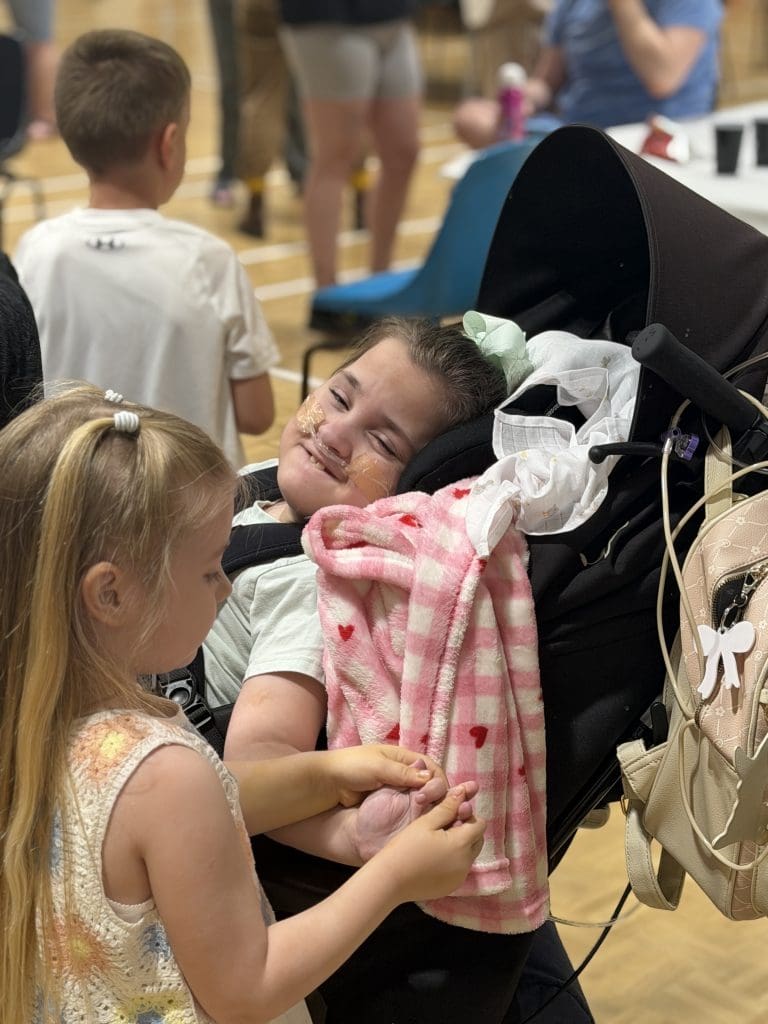
“It’s those shared moments that really matter,” says Cat Wilde, Children’s Team Operational Lead and Safeguarding Lead at ellenor. “Not just for the children, but for the whole family and for our staff too, being able to see families connect, laugh and just be together.”
At ellenor’s Easter party, Captain America, shield in hand, stood ready for photos in front of a wall of pastel balloons, while Anna from Frozen was warmly greeted by the children.
But across the room, something else was happening.
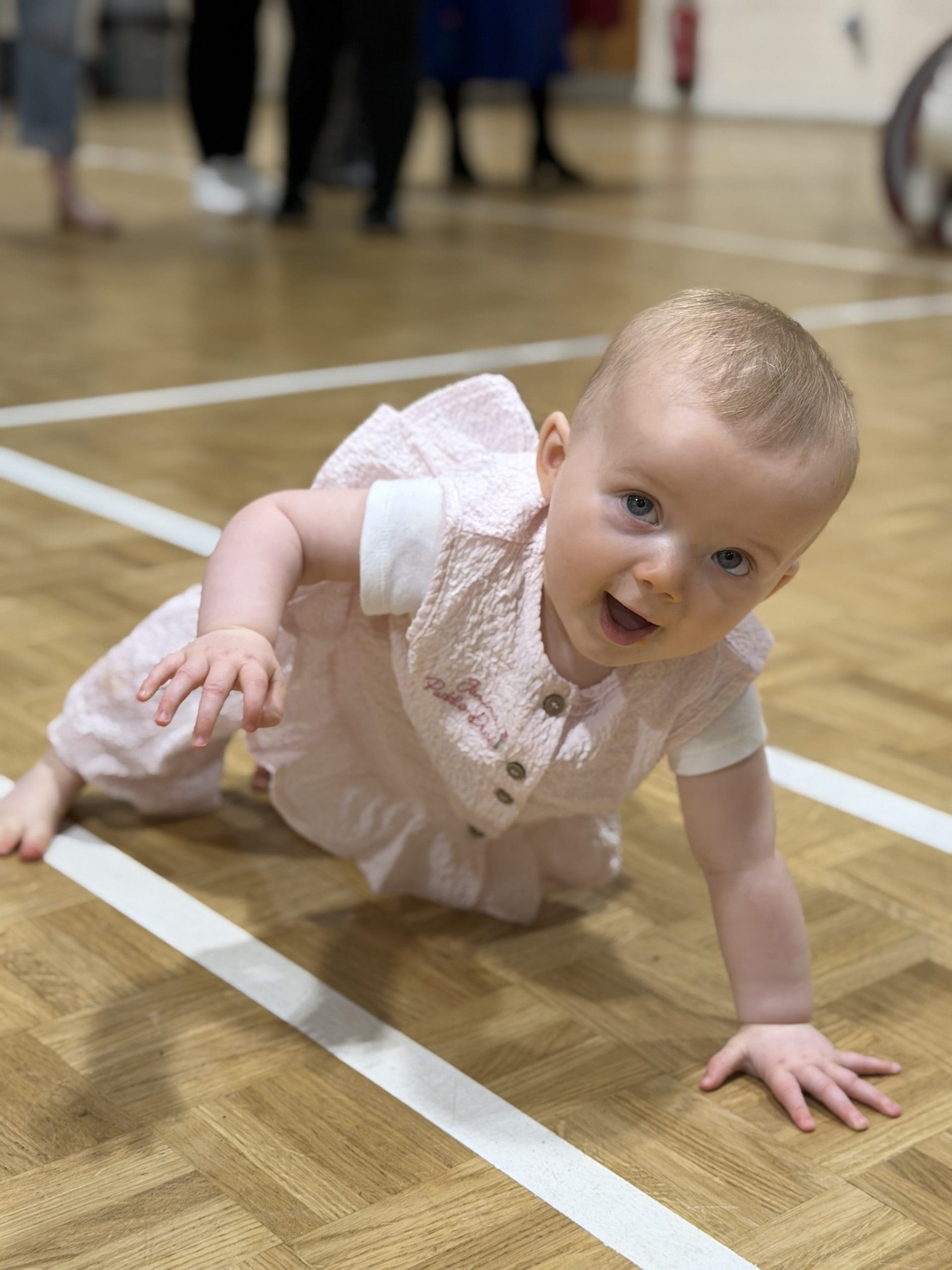
A child reached out to touch a puppet’s ear. A shy smile turned into laughter, and children’s giggles filled the room. Families including siblings, parents and carers along with ellenor’s Children’s Team, joined in, enjoying the moment together- a day created by the team for the children and families they support.
HandMade Theatre brought animal puppets, songs and gentle interaction to the party but what they offered felt like something more than performance.
In a setting where children with life-limiting conditions may have very different needs, energies and ways of engaging, their work remained flexible and responsive, allowing children and families to engage in their own way.
For Amy, who co-founded HandMade Theatre with Suzy Gunn, that flexibility is at the very heart of what they do.
“As a company, we like to make work that is accessible,” she says. “It’s not about something being viewed from a stage. It’s about getting interactive.”
At ellenor, where children and families are living with life-limiting conditions, that approach matters. The experience is built around them from the start allowing children to engage in their own way, at their own pace.
HandMade Theatre’s puppets are designed to be touched, handled and explored. Their shows have structure, but never rigidity. If a child needs more time, they are given it; if something sparks curiosity or delight, the performers follow that lead.
“There is a script and there are songs,” Amy explains, “but there’s so much flexibility within that as well. If a child’s really enjoying an interaction with a puppet, we can stretch that out. We can give them the time they need.”
This was not theatre asking children to sit still and watch, but something that allowed them to move, touch the puppets and take part in their own way.
Niamh, who performs alongside Amy, says that is where the magic lies. “What I love about performing in these shows is the interaction,” she says. “With the puppets, you can completely tailor it to each child and family.”
Rather than imposing a fixed energy on the room, she tries to take her cue from the children themselves.
“I usually let them guide me in terms of how I play with them. Kind of coming at them with the same energy that they come to me with usually creates a really nice experience.”
That instinct to follow rather than instruct feels especially powerful in a hospice environment, where so much of family life can be shaped by appointments, care needs, routines and uncertainty. Here, for a while, the invitation was simply to play. Amy’s puppets help make that possible.
Inspired by real animals, they are full of personality: there’s a cheeky, lovable goat hungry for attention and a Highland cow who is shy and stoic. The show is full of surprise and movement, dancing, chicken noises and chicken dances – but also texture. Lots of it.
“All the different materials are carefully chosen,” Amy says. “They’re designed to be touched and there are different textures.”
An ear feels different from the hair; the hair feels different again from the nose. Movement in the puppet gives it life, the fabric gives it character. Together, those details create something deeply sensory.
In a setting like ellenor’s Easter party where the Children’s team understands that children may engage through touch before words, or respond to texture, sound and movement in ways that are entirely their own, that approach is what allows the work to connect.
Amy says the company’s roots lie partly in that understanding. HandMade Theatre began in 2012, shaped by her desire to make performance more tactile and more materially rich.
“We were working a lot in special schools initially,” she says. “I just saw that a lot of these children, all they had access to was plastic. I didn’t like that.” Instead, she began creating work from materials that invited curiosity and contact: fabrics, leather, suede, foam, recycled objects, scraps from charity shops, even old toilet rolls and tin foil. “I love telling children that,” she says. “They see these things that look really beautiful and think, ‘Oh, I couldn’t make that.’ And I’m like, yes, you could.”
That sense of accessibility runs through the company’s ethos. Their shows are not only handmade in the literal sense. They are, Amy says, “handmade by everybody.” “It’s not, we are performing and you will watch this,” she says. “They are part of that show.”
That collaborative spirit felt completely at home at ellenor. This was an Easter party but it was also something more: a space created for families who do not always get easy access to experiences like this. A space where siblings, parents, grandparents and children could all take part together.
Amy is clear that Handmade Theatre does not see itself simply as a children’s company.
“We very much say we are a family company,” she says.
“We love intergenerational audiences,” she says. “Our favourite thing is when parents, grandparents and children are all joining in, sharing something together. It’s not about sending the children to the front. It’s about everyone taking part.”
At ellenor, that matters. For families facing the pressures and complexities that can come with caring for a child with a life-limiting condition, opportunities to be together are not small things. They are vital. Amy saw that clearly in the room.
“It’s that opportunity to celebrate,” she says. “It’s not always easy for these families to be able to get out and do everything that everyone else might be able to do. So to have a safe space where they can come together and play and laugh and feel really special, that matters.”
Looking around, she noticed something else too. “There’s a lot of love in this room.”
That may be the simplest way of describing what theatre can offer in a place like this. Not escape, exactly, and not distraction alone. But a chance for children and families to meet each other somewhere other than appointments, medication and worry. A goat made from recycled materials can do that. A puppet with kind eyes can do that. A song, a dance, a moment of awe beneath a huge Highland cow can do that.
Before the day ended, Niamh offered one last thought. “Play is the most important thing in life,” she says. “Whether you’re young or an adult or an older person, there’s always time in life to play and everyone deserves to.”
At ellenor’s Easter party, that felt entirely true.
Handmade Theatre’s work is supported through Applause Rural Touring, which connects artists with community settings that might not otherwise have access to live performance.
Filter by: