Why Isn’t Mum Eating?
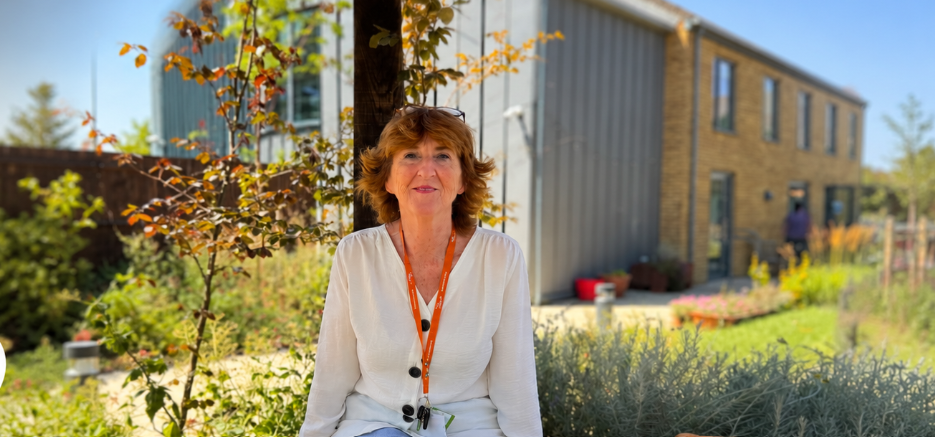
After more than 25 years in nursing supporting patients and families living with life-limiting illness, Sue Marshall has seen first-hand how fear and uncertainty can leave people feeling unprepared for the realities of dying. Time and again, she hears the same questions from families trying to understand what to expect when someone they love is approaching the end of life.
“People are frightened because they’re frightened of what the answers might be,” says Sue.
“Not because they don’t care.
Not because they don’t want to know.
But because they’re frightened.
Although they want to ask, they’re also too scared to ask.”
Yet the questions she hears are rarely medical.
Why isn’t Mum eating?
Why are Dad’s hands so cold?
Should I call an ambulance?
How will I know when the end is near?
For many families, those questions begin long before anyone talks about end-of-life care.
“Often, without realising it, people are already on a grief journey before there’s a diagnosis,” says Sue.
“They might have seen a decline in their loved one. Maybe they’ve noticed weight loss. Maybe they’re not as vivacious as they were. Maybe they’re withdrawing slightly.”
Long before a diagnosis, many families are already worrying about what is happening and what might happen next.
One word Sue struggles with is “acceptance”.
“I don’t like the word acceptance,” she says.
“I’ve seen people who have convinced me that they accept it, and then right at the very end they’re terrified.”
Instead, she prefers the phrase “coming to terms with it”.
“The day they wake up and can’t walk anymore. The day they can’t look at their watch. All those things, they have to come to terms with.”
One question families frequently ask is why their loved one is eating and drinking less.
Watching somebody refuse food can feel deeply upsetting. It can feel as though they are giving up.
But Sue says it is often part of the body’s natural process.
“The body knows how to die,” she explains.
As the body slows down, it needs less food and fluid. Circulation changes too.
Families often become distressed when they notice cold hands, cold feet or changes in skin colour.
“They’re cold, they’re cold,” Sue says, recalling the concerns she hears from relatives.
But these changes are often a normal part of dying.
“The circulation is going much, much slower.”
Another question families often ask is about changes in breathing.
One example is what was traditionally known as a “death rattle”.
“The old terminology for it is death rattle,” says Sue. “It’s often just a small amount of saliva or secretions that the person is no longer able to clear.”
As the body becomes weaker, swallowing becomes more difficult and saliva can collect at the back of the throat.
For families, the sound can be frightening and many assume their loved one is struggling.
But Sue says it is usually a normal part of the dying process.
“If we can get this over to people, it’s natural,” she says. “It’s a normal part of dying.”
For Sue, that is often part of the problem.
“Nobody’s ever explained it to them.”
Another thing that can catch people off guard is what hospice staff sometimes call “the rally”.
A person who has been asleep for long periods suddenly wakes up.
They might ask for food.
They might want a conversation.
They may seem more like themselves again.
Families naturally assume things are improving.
“It can be very confusing,” says Sue.
“Nobody’s ever explained it to them.”
Not everybody experiences a rally but understanding that it can happen helps families make sense of what they are seeing.
Yet for Sue, hospice care is about much more than medication.
“When we’re lying in a bed 14 hours a day, with nothing to occupy us, those things come back,” she says.
“We reflect on life. Have I been a good person? What could I have done differently?”
People think about relationships, old disagreements and words left unsaid. They think about the people who matter most to them.
“People harbour stuff for years,” says Sue. “Then when we get to the end of life, and we’re laying there with nothing to keep us busy, those things come back.”
That is why hospice care is about far more than managing physical symptoms.
Sue remembers one patient who became increasingly agitated.
Medication was making little difference.
Then staff realised something important.
“He wanted to be outside.”
His bed was moved into the garden.
“Within 10 minutes, he was settled,” says Sue.
“He could feel the air. He had the sunshine on him. When it rained, he had the rain on him.”
He never needed more medication.
“It wasn’t the medication,” says Sue. “It was the garden.”
This story has stayed with Sue.
People do not stop being themselves because they are dying.
They still have wishes.
They still have preferences.
They still have things that matter to them.
Sometimes understanding what matters most to the patient can be just as important as any medication.
For families, the experience can feel just as overwhelming.
Many worry they are getting things wrong.
Many feel they should somehow know what to do.
“I see families feeling helpless all the time,” says Sue.
“They desperately want to help the person they love.”
Often, they are trying to navigate a situation they never expected to face.
There is no handbook.
No perfect way to do it.
If she could sit beside every family caring for someone approaching the end of life, Sue says one thing matters above all else.
“I would want them to feel safe.
“In a space where they could really, really go deep and ask the questions they’d been afraid of asking.”
Questions such as:
What happens then?
What might happen?
Is this normal?
Because after 25 years supporting patients and families, Sue knows that fear often comes from not knowing what to expect.
“If we can get people to the point where they feel confident to ask us the questions and hear the answer, it can help them feel more prepared for what lies ahead.”