{{ item.categories[0] }}

The hospice role you never see, and why it matters
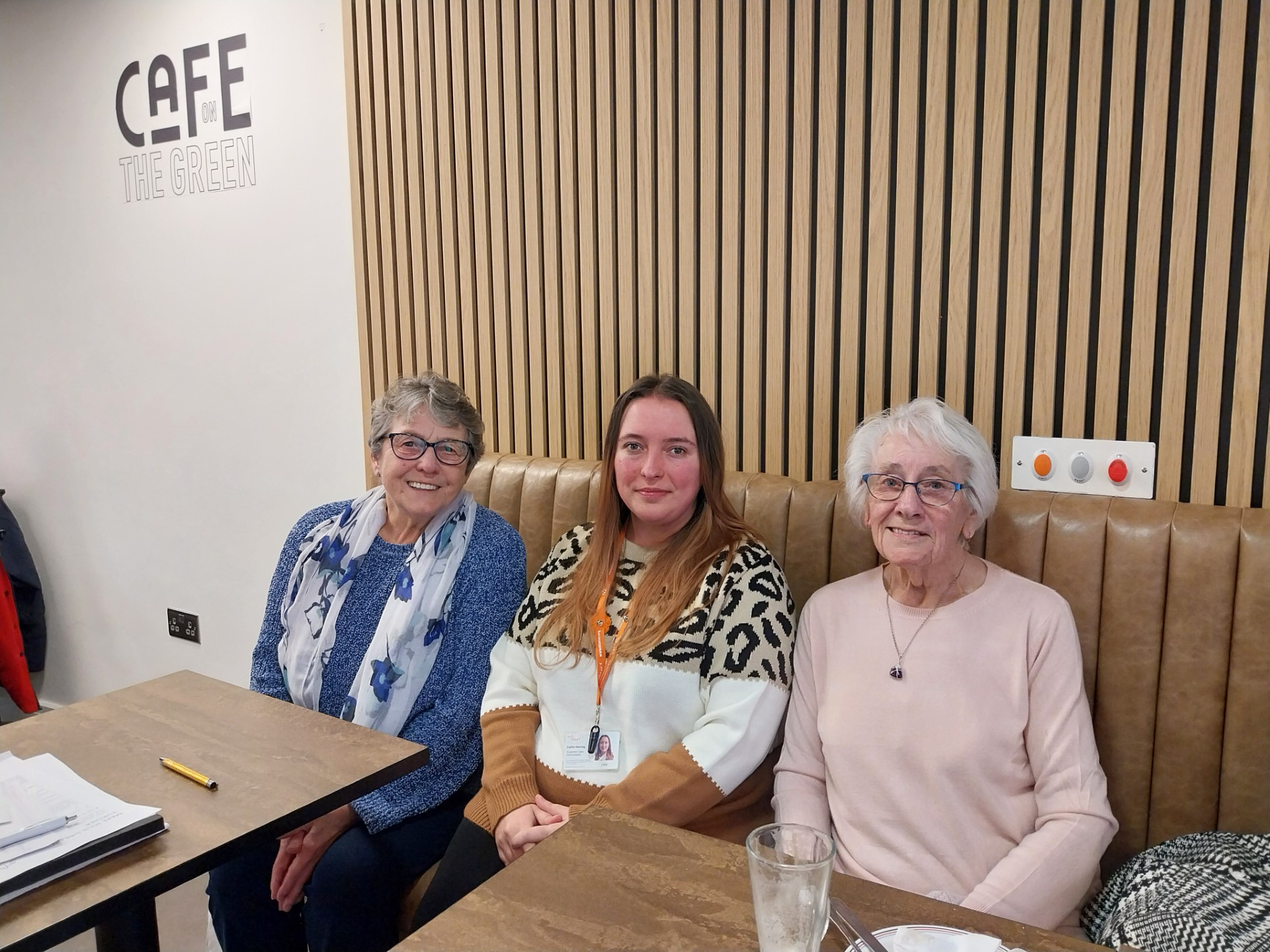
Behind every moment of hospice care at ellenor is a team whose work is rarely seen. At 26, Caitlin is part of that team. She works in Supporter Care, a role that does not involve uniforms, clinical settings or bedside conversations but which quietly makes everything else possible.
Caitlin works at ellenor, the hospice charity supporting people with life-limiting illness and their families across North Kent and Bexley. It is not the job people imagine when they hear the word “hospice.” When she tells people what she does, the response is usually the same.
“Why would you want to work in a hospice?”
She describes it as a stereotypical reaction, rooted in the assumption that hospice care is only about death, and that working there must be unbearably sad. It is a view she understands. Until recently, she had not fully seen what hospice work involved either.
“There is so much more to hospice care that people don’t see,” she says. “It’s about supporting people to live well, being there for families, and making sure care can happen when it’s needed, not just at the very end.”
Caitlin’s work happens mostly behind a screen. Her days are spent processing donations, updating records, answering calls, responding to emails and ensuring supporter information is handled accurately and sensitively. She is not clinical. She does not sit with patients.
Yet without this behind-the-scenes supporter care work, much of the care people associate with hospices simply would not happen.
“My job is to look after the people who make everything else possible,” she says.
She joined ellenor at a moment of personal change. The previous year, her nan died. At the same time, she was working in a role that felt empty and directionless.
“I was in a job where it wasn’t really giving anything back to me,” she says. “I didn’t feel like I had anywhere to go.”
She wanted something that mattered. She wanted purpose.
She wanted to leave work knowing she had done something good for someone else that day. When a role in supporter care appeared, the timing felt impossible to ignore.
Caitlin grew up in Gravesend. Years earlier, while still in sixth form, she completed a 6 month Young Carers placement at the hospice. At the time, she dreamed of becoming a doctor or something similarly ambitious. But the placement stayed with her.
“It was phenomenal,” she says. “I always vowed to myself that one day I’d work somewhere where I could make a difference.”
When the Supporter Care role appeared just as she was looking to change direction, she took it as a sign. “I felt like this is where I belonged,” she says.
Supporter care is not a role many people recognise. Caitlin’s days revolve around donations, which arrive in many forms: online, over the phone, in person, by card, cheque or cash. Some are small. Some are large. She does not distinguish between them.
“My first thought is that they’ve chosen us,” she says. “They didn’t have to give, but they did..”
Every donation, she believes, carries meaning.
Some are given in memory of someone. Others come from people grateful for care received or simply wanting to support their local community. Most of the time, Caitlin never meets the person behind the gift.
“You just hear a voice.”
That distance makes accuracy essential, because many donations are made in moments of grief, gratitude or remembrance.
“People are trusting us with something very personal,” Caitlin says. “The last thing anybody would want is for a mistake to be made that adds stress or upset at an already difficult time – especially when a donation is given in memory of someone they love.”
For Caitlin, getting things right is a form of care.
“We don’t want to put people through any more stress or pain,” she says.
One moment made the responsibility of her role sharply into focus. A supporter came into the hospice just days after losing someone there.
“I remember thinking how much strength that must have taken,” she says. “They were so grateful for the care they wanted to give back that soon.”
The moment stayed with her, not because of the donation itself, but because of what it represented.
“It makes me realise how important our work is,” she says. “We must have given such good care that this person feels they want to give back.”
Although she does not work clinically, Caitlin sees her role as part of the care pathway. Before a nurse can visit a patient at home, or someone can be admitted to the ward, the funding has to exist.
“My role makes that care possible,” she says.
It is far removed from how many people imagine hospice work, particularly for someone in their twenties. Caitlin understands why those assumptions exist.
“When you’re young, you haven’t lived through certain experiences yet,” she says. “Loss, illness, caring for someone – it changes how you see the world.”
That, she believes, is why many supporters are older. But it is also why she thinks hospice care needs to be talked about earlier, and more openly.
“ellenor feels like a family,” she says. “It feels like home.”
There are sad moments. Grieving supporters. Difficult conversations. But they don’t define the days.
“Your days are mostly filled with joy,” she says. “The sad moments remind you how important life is, and how important your role is. Then it flips back to joy again.”
Until recently, Caitlin had not fully articulated what her job meant, even to herself.
“When people ask me what I do, I don’t always know how to explain it,” she says.
Breaking it down changed that.
“Sometimes supporters thank me, and I think, why?” she says. “They’re really thanking the care they received from nurses or doctors.”
“And then you realise you did comfort that person,” she says. “You helped change how they felt when they walked through the door.”
It is quiet work. Often unseen. But for Caitlin, at 26, it is work that matters.
And it is work she did not know existed, in a place she now cannot imagine leaving.
Filter by: