When The Phone Rings: Understanding ellenor’s Referral Process
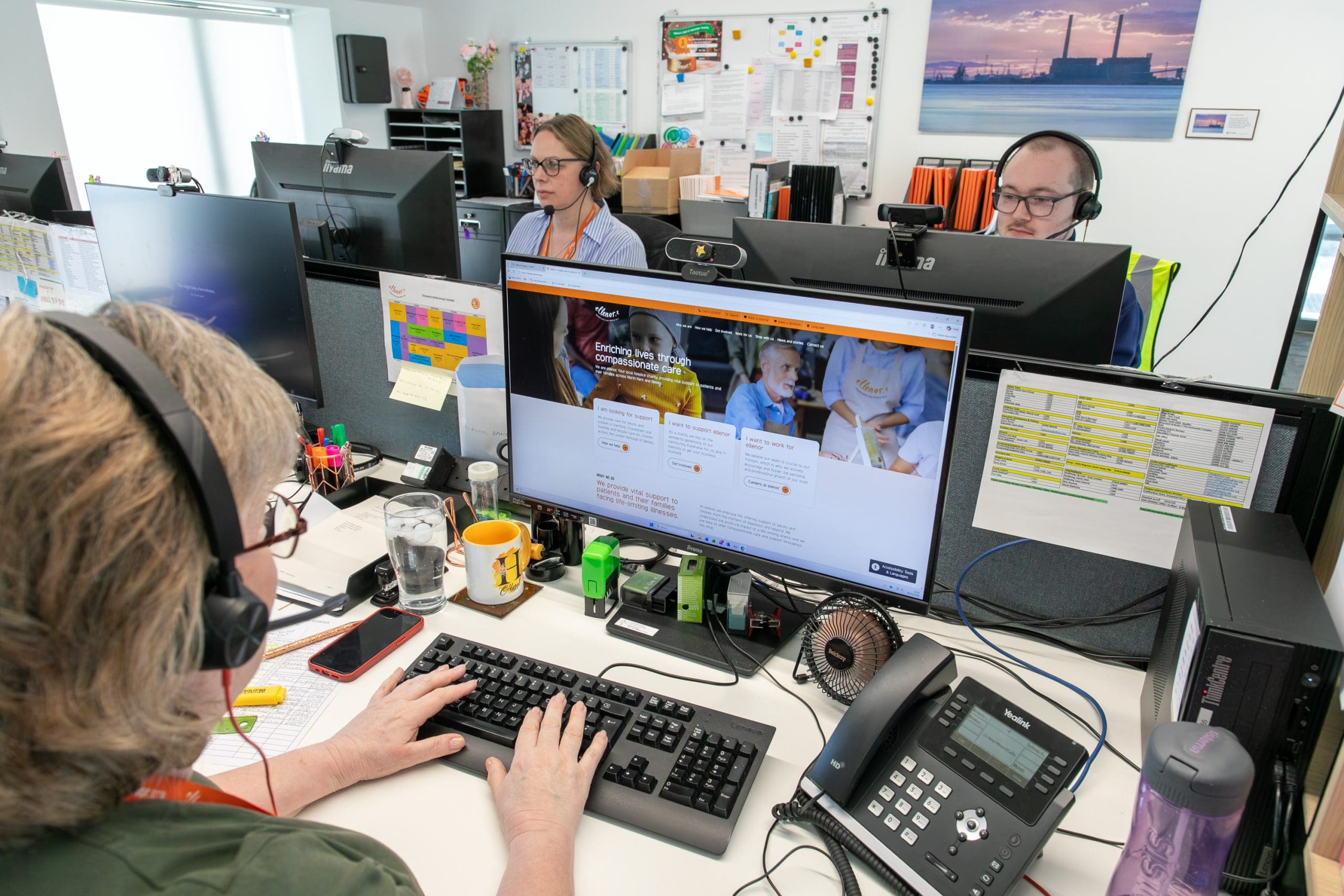
The phone can ring at any moment.
A daughter worried her mum is getting worse. A husband struggling to get hold of medication. A family unsure what to do after someone has just died.
At ellenor, calls like these happen every day.
For Lesley Dawson from the Adult at Home Care team, no two calls are ever the same.
“It can be anything,” she says. “You never quite know what’s coming through that phone.”
For many people, that first contact with hospice care can feel overwhelming. Some may not know what ellenor does. Others may assume help will arrive immediately. Some may still believe hospice care is only for the final hours or days of life. IIn reality, what happens next isn’t always what people expect.
“In reality, what happens next isn’t always what people expect,” Lesley says.
When someone contacts ellenor, the focus is first on understanding what is happening and how best to support the person and their family.
“When someone calls, we try to understand the situation and ask how we can help,” Lesley explains.
“What happens next depends on the situation. If somebody’s condition appears to be worsening, the team may look at what support is available and who else may need to be involved in their care. If emotional or practical support is needed, families will be guided towards the most appropriate help within ellenor or beyond.”
In reality, families are often reaching out during some of the most stressful moments of their lives, something Lesley feels people do not always fully understand.
“Sometimes people will say, ‘we need you to come today’,” she says. “And I completely understand why they’re asking that.”
Families are often frightened, exhausted and trying to cope with an incredibly difficult situation.
That does not mean the call is not important or that support stops there. Sometimes the most important thing is helping people feel listened to, reassured and guided through what to do next.
“What we can do is make sure the right things are in place,” Lesley says. “If we can’t go, we’ll find someone who can.”
This is where understanding hospice care matters. ellenor supports people and their families living with life-limiting conditions but that support is not limited to the final days of life, and it is not only about physical decline. The Adult at Home Care team focuses on symptom control and physical support, while the wellbeing team offers counselling, complementary therapies and wider emotional support for patients and families.
“It’s about the whole person,” Lesley says. “Not just what’s happening physically, but how they’re coping, how their family is coping too.”
For many families, however, the word hospice still carries fear.
“The word ‘hospice’ can make people anxious,” Lesley says. “Some people think it means we’re going to take them away from home, or that they’re dying immediately.”
In reality, she says, hospice care is about helping people live as well as possible for as long as possible, with the right support around them.
“We’re here to help people stay comfortable, keep symptoms controlled and make sure their wishes are respected.”
That support may look different for every family. It might mean helping somebody remain at home. It might mean emotional support for a family member who feels frightened and unsure what to do next. It might mean helping people feel more prepared before a crisis develops.
Lesley believes one of the biggest barriers to good support is misunderstanding about what hospice care really is and when people should reach out for help.
She says many families still do not fully understand what support hospice care can offer, or how early support and conversations can help people feel more prepared.
“Sometimes we receive a referral and the person has died before we’ve had the opportunity to support them,” she says. “That’s the hardest part.”
For Lesley, honesty sits at the heart of good care.
“I think the most important thing is being clear with people,” she says. “If you understand what’s available, you can make informed decisions.”
It also means recognising that families are often calling at one of the most stressful moments of their lives. At night especially, that stress can intensify.
“Night time is the hardest,” Lesley says. “You’re on your own, and your mind starts racing. Sometimes people just need someone to talk to a calm voice to reassure them and guide them through what to do.”
Every conversation is different, and every family brings their own fears, questions and pressures.
But through all of that, the aim remains the same. To listen carefully, respond honestly and help people feel less alone.
For Lesley, that is why helping people better understand hospice care matters so much. When families feel informed, supported and less frightened about reaching out for help, ellenor can do what it does best: guide people through uncertainty and help them feel less alone.