{{ item.categories[0] }}

If A Child Isn’t Emotionally In The Right Place, They Can’t Learn
How play therapy, supported by ellenor, helps children through grief and loss
On most mornings, Jacqui Scarboro can be found at the school gate at West Hill Primary Academy in Dartford, greeting families as they arrive. She knows the children by name, recognises parents’ faces, and often senses when something is not quite right before a word is spoken.
Jacquiis the school’s Family Support Worker, a role that places her at the heart of school life. Alongside this, she is also trained in therapeutic play skills, supporting children to process worries and emotions in a way that feels safe and age appropriate. The two roles, she says, sit naturally side by side.
“Families come to us with all sorts of things,” she explains. “Sometimes it’s practical support, sometimes it’s emotional. Often, it’s both. My job is to help them feel heard and to signpost them to the right support.”
West Hill Primary is a large and increasingly diverse school, serving a community that has changed rapidly in recent years. Dartford is one of the fastest-growing towns in the country, with new housing developments bringing new families – and a great deal of movement – into the area.
“It used to be that families would come here and stay for the whole of their primary school journey,” Jacquisays. “Now we see much more change. Families move in, then move out again. There’s more pressure, more uncertainty.”
That uncertainty has been compounded by the lasting effects of the pandemic and the ongoing cost-of-living crisis. Jacqui sees first-hand how these pressures show up in children’s lives.
“The level of anxiety is huge for parents and for children,” she says. “Covid changed how families relate to the world. Some parents became very fearful about letting their children go to school, about illness, about risk. And financially, many families are struggling in ways they weren’t before.”
For schools, that means children often arrive carrying worries far beyond the classroom.
“If a child isn’t emotionally in the right place, they can’t learn,” Jacqui says simply. “You can repeat something ten times, but if they’re anxious or distressed, it just won’t go in.”
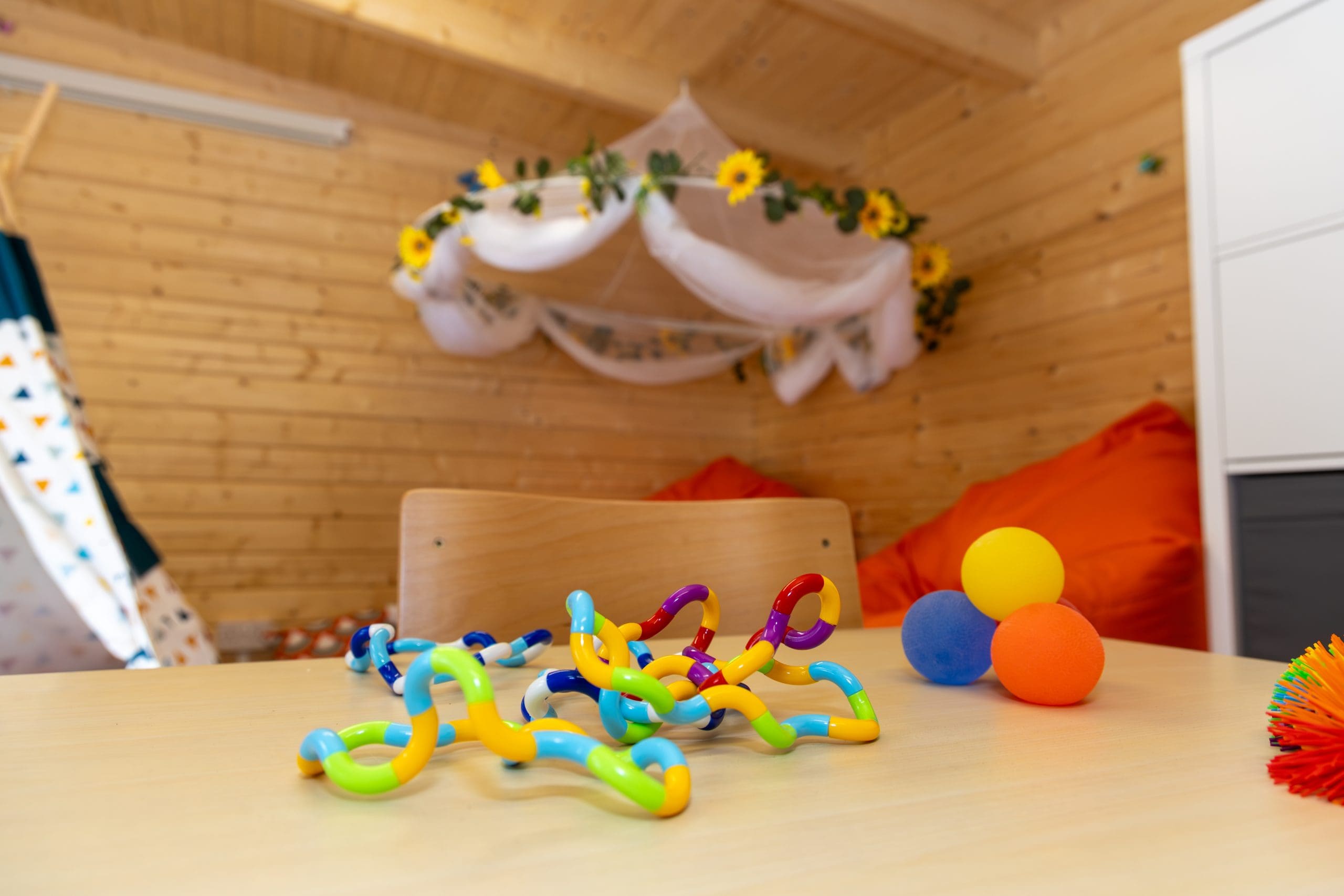
This is where therapeutic play comes in. Rather than relying on talking alone, play-based approaches allow children to lead at their own pace, using familiar materials such as toys, drawing, sand and dolls to explore their thoughts and feelings. For children who may not yet have the words to explain grief, anxiety or confusion, play offers a natural and safe way to communicate. Over time, this can help children feel calmer, more secure and better able to engage with learning and relationships, including at school.
“It’s very gentle and very child-led,” Jacqui explains. “Often while they’re playing, things start to come out naturally. Worries, fears, experiences. It gives them a safe space where they don’t feel judged or pressured.”
Within the school, Jacqui provides a calm space for children who are struggling. But when children are dealing with more complex experiences particularly serious illness or bereavement, additional specialist support is sometimes needed.
That support comes through ellenor, which provides bereavement and therapeutic services for children and families across North Kent and Bexley. At West Hill, this support is carefully integrated into the school day and always centred on the child’s individual needs. Through partnerships with local schools, ellenor brings specialist therapeutic support directly into familiar settings, helping children access care without disrupting their education or sense of routine.
“Families usually already have a relationship with ellenor,” Jacquiexplains. “They’re coming in because there’s been illness or a significant loss. The therapy happens confidentially, and my role is to help provide the space within school, so the child feels safe and supported.”
For children, the sessions are often framed simply as “special time”.
“They don’t see it as therapy,” Jacqui says. “They see it as a one-to-one space where they can play, talk, or just be. And that makes a huge difference.”
Over time, Jacqui notices subtle but important changes. Some children become more settled in class. Others show greater confidence or resilience. For many, attendance improves as school begins to feel safer again.
“They’re all different,” she says. “Some children tell you exactly what’s wrong straight away. Others never really verbalise it, but you still see a change. They’re more relaxed. They cope better with friendships. They’re more able to engage.”
Jacqui has worked at West Hill since 2010, and her connection to the school runs even deeper. She attended the school herself as a child and later sent her own children there.
“I’ve never really left,” she laughs. “It’s been part of my life at different stages. That sense of belonging matters – for staff, for families, for children.”
That sense of belonging is central to how support works at West Hill. Jacqui is visible throughout the day, not just in her office. She greets families at the gate, notices small changes in behaviour, and builds trust over time.
“You might see a child upset, or a parent looking overwhelmed,” she says. “Those moments help you understand what might be going on beneath the surface.”
For Jacqui, the most important lesson from therapeutic work is the value of time and space.
“People, children and adults need time to work through things,” she reflects. “You can’t rush it. You just need to sit with what’s there, in a safe, confidential space.”
It is a philosophy that aligns closely with ellenor’s wider approach to care: walking alongside families through illness, uncertainty and grief, and continuing to support them long after the immediate crisis has passed.
As Jacqui puts it, “It’s about helping children feel safe enough to be children again.”
In a world that feels increasingly fast-paced and pressured, that simple act – creating space to feel – can make all the difference.
Filter by: